







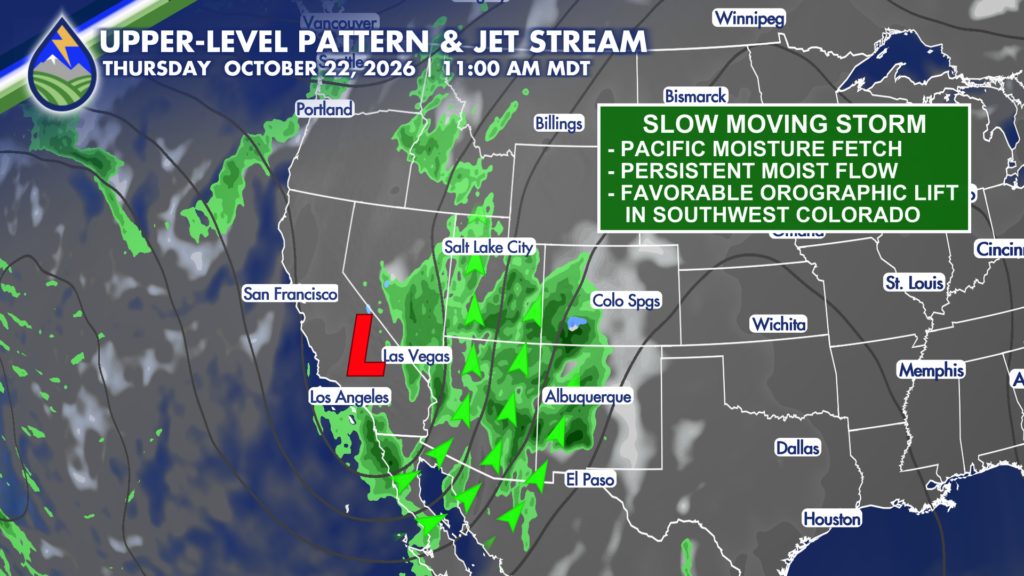
The weather pattern of storms over the western U.S. already has an El Niño look to it. Storm systems are tending to dive off the West Coast and then lift northeastward, setting up southwest flow over Colorado. That southwest flow can tap Pacific and subtropical moisture and direct it into the higher terrain of the Southwest. For southern Colorado, that is often a favorable setup for the San Juans and nearby mountains.
Through at least Wednesday, conditions should remain generally pleasant across our area. The next western storm will still be well to our west, so there is no reason to rush into the late-week weather just yet. By Wednesday and Thursday, though, southwest winds aloft begin to increase and moisture should start reaching the mountains. A couple of afternoons could turn breezy east of the mountains around Wednesday into Thursday as the system approaches.
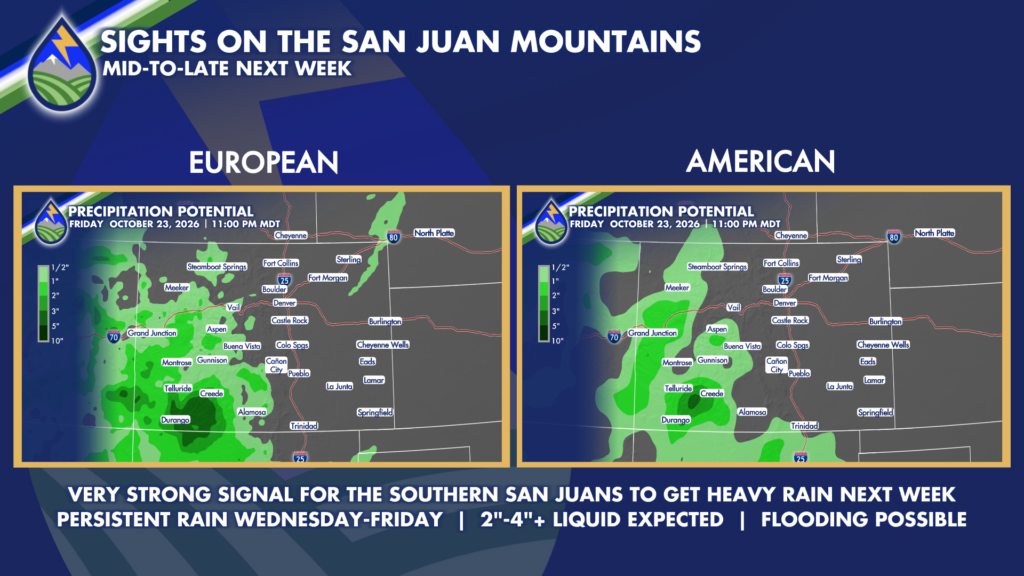
The clearest forecast signal at this point is centered on southwest Colorado from Thursday into Friday. The southern slopes of the San Juans could see a healthy round of precipitation as persistent southwest flow lifts moist air over the terrain. Current guidance suggests the potential for a substantial amount of liquid moisture there, with some projections in the range of 2 to 4 inches and perhaps locally more. A few of the wetter model solutions are higher still, but the important takeaway is that the southwest mountains have the best chance for meaningful moisture.
With snow levels expected to stay fairly high at first, much of the early precipitation in the high country may fall as rain, especially during the daytime. There will still be snow at higher elevations, and snow levels could lower somewhat at night. This does not currently look like an abnormally cold system for the season, so it is not a straightforward all-snow setup. The exact rain-versus-snow line will matter for mountain travel, the higher passes, and communities at elevation, and that detail will come into better focus as we get closer. The potential for heavier rain in the southwest mountains also raises a concern for localized flooding issues. This part of the state has already picked up some decent moisture, and another persistent round of rain could create trouble in the more vulnerable drainages.